

Health and Safety Committees – Refresher Course
Topic 8: Functions of Health and Safety Committees
In this topic we are going to review the functions of a Health and Safety Committee. It is important to understand that functions are not duties or requirements. Functions can be seen as entitlements or, a right to perform these activities.
Safety Committees have three legal functions as summarized below:
Legal Function 1
The first legal function is about facilitating cooperation between the PCBU/Employer and workers on safety matters.
Facilitating in for instance instigating new safety projects, developing existing safety measures or carrying out safety measures such as safety inspections and or incident investigations.
Legal Function 2
The second function is to assist the organization in developing or formulating standards rules and procedures that apply to the workplace and that must be followed or complied with.
So you can review your safety policies & procedures, safety processes etcetera and review those for their relevance, accuracy and effectiveness, and make recommendations for improvement if needed.
Legal Function 3
Function number three is any safety activity prescribed by the Regulations or those you would like to get involved in but for which you need to get approval from management.
So how do these functions translate into real activities on the ground?
Well, let’s have a look at a few. It means for instance that you can:
- represent workers’ views on safety matters to management
- carry out safety inspections, incident investigations
- review any measure taken by the organization in the interest of safety for their effectiveness
- review safety policies & procedures, training programs, training needs etc.,
just to name a few.
And of course, the safety committee will then share their views and make recommendations to management which in turn will enable management to make informed decisions about the matters raised. As such, a well organized safety committee can make a significant positive contribution to safety management and overall business success.
And always remember, although safety maybe driven by moral and ethical reasons good safety is good for business. The value a safety committee can bring to the table can never be overstated. Good safety is good for business.
In your handbooks you will find many more suggestions for safety committee activities.
Case Study – Chemical Accident
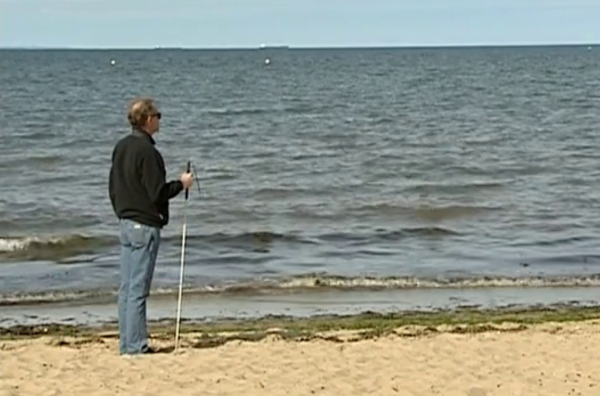
This is a real story about a man called Ken who worked in a manufacturing plant and just before the end of his shift he was asked to mix 2 chemicals together in a cannister. Ken, at the time, was not too serious about safety and the chemicals he was asked to mix were very dangerous.
There was a pair of goggles sitting right in front of him within arms length but Ken decided not to put these on and then he started mixing these chemicals.
During the process he got the sequence of the mix wrong which caused a chemical reaction which resulted in an explosion with his face right in the path of the explosion.
There was a quick emergency response and although he was put immediately under a safety shower, the damage had already been done.
Ken ended up loosing both eyes and as a result of the chemical contamination, he became a severe diabetic, developed serious medical issues with his organs and lost most of his sense of taste and smell.
In addition, the trauma the he and his wife suffered is beyond any description and this trauma continues to this day. 35 of his workmates required counselling and the accident cost the company 2.6m British pounds which in today’s money is about 5million dollars.
So what could the safety committee have done to prevent this accident?
Imagine that you are a safety committee member in Ken’s work area and you notice Ken preparing to mix those chemicals without his goggles on. You may have noticed this practice been carried out by others as well. Would you tap him on the shoulder and alert or remind him to wear his goggles? Would you have raised this issue to management?
Such interactions may seem insignificant or minor and may take less than 5 seconds, but of course they are very significant and potentially life saving.
Now lets assume that Ken actually put his goggles on after your comment. In this context, consider the following questions:
| Would Ken still have his eyesight? | Yes, Ken confirmed this would be the case |
| Would Ken still suffer from the many other serious injuries? | No, the injuries would not be as severe |
| Would 35 of his workmates need counselling? | No |
| Would he and his family suffer from this ongoing trauma? | No |
| Would the company have had to pay out the equivalent of 5 million dollars.? | No |
This case study is just one example of the value that a Safety Committee brings to an organization. The issue with Safety Committee interactions is that you can hardly ever prove that you avoided an accident through these interactions. So you just need to develop and maintain the confidence that as a Safety Committee member, you do make a positive difference to peoples lives on a daily basis.
In this case, there were also tell tale signs that something was wrong such as poor maintenance procedures, a lack of safety procedures and processes, a lack of incident reporting, poor management commitment etc.
All of these may have been picked up by the committee and raised with management which could have prevented this accident.
Safety Committees are GOOD for Business